Blog

Nectar from urban gardens to the rescue of insects

A sunny spring day in the Deux-Sèvres. In my garden, bees and bumblebees are buzzing. Just on the other side of the dry stone wall, the agricultural plot is silent. Populations of pollinating insects are collapsing in Western Europe, mainly due to lack of food. Are populated areas refuges for all the little beasts?

Colleagues (1) investigated this question in 12 locations in the UK, comparing the amount of nectar produced by flowers in cities, agricultural areas and protected areas. To do this, they collected as much nectar as possible from the different flowers with a micropipette, becoming foragers themselves.  To their great surprise, there was on average no more nectar available for insects in the city than in agricultural areas and protected areas. However, within urban areas, some fully concreted habitats were extremely poor, while home gardens produced 85% of all available nectar, four times more than public parks. Thus, insects have much more food available to them in a garden than on an agricultural area. This urban nectar comes from a wide variety of plants, which contributes to its quality and extends the period of the year during which it is available. The second surprise was that 83% of the nectar in the gardens was produced by exotic plants. These species are often considered to be “beautiful and useless”, as they do little to benefit local biodiversity. Some are even invasive and potentially harmful. In fact, the study by British academics indicates that exotic flowering plants may have become essential for the survival of insects in our urban landscapes. Of the 536 flowering plants they studied, the scientists point out that species such as borage and butterfly tree (from the Middle East and China respectively) are excellent sources of nectar. For public parks, they recommend reserving certain areas to grow mixed flowers, which produce 16 times more nectar than a lawn.

This study is sure to delight urban gardeners, where flowering plants are now taking on a militant air; I’ll be thinking of them as I watch the bees foraging in the borage beds that bloom on the edge of my vegetable garden.

(1) Tew, N. E., Memmott, J., Vaughan, I. P., Bird, S., Stone, G. N., Potts, S. G., & Baldock, K. C. (2021). Quantifying nectar production by flowering plants in urban and rural landscapes. Journal of Ecology 109: 1747-1757.

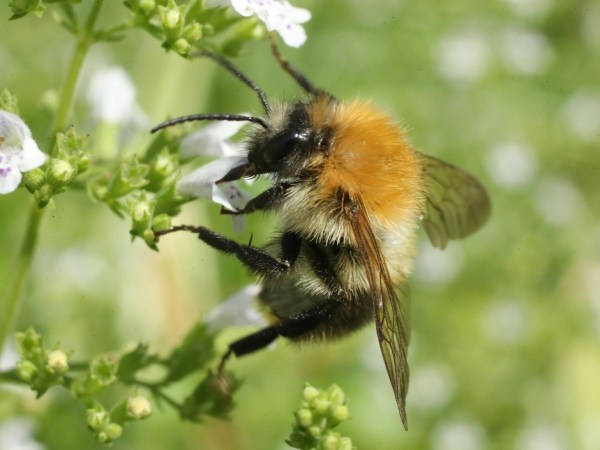
Bombus pascuorum (Photo credit: Getty)
In the cool of the air conditioning

Phoenix, Arizona, the hottest city in the United States. Three months of the year, the daytime temperature exceeds 40°C. Since the invention of air conditioning a century ago, wealthy humans have lived in a cool bubble. Around them, animals are increasingly roasting in the Arizona sun as urban activity creates a deadly heat island; even rattlesnakes are fleeing.

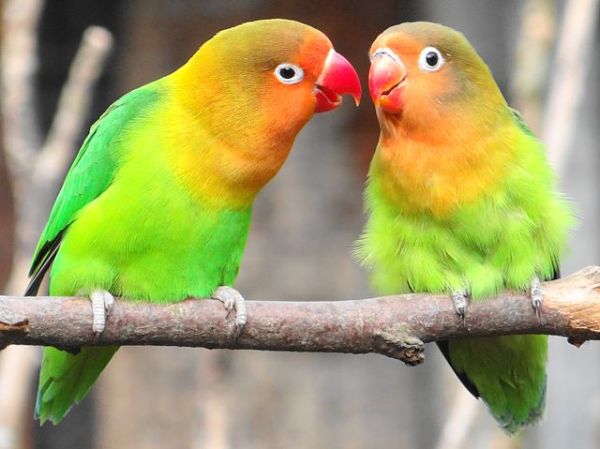
More than 100 bird species are threatened by climate change in Arizona, but rosy-faced lovebirds found a trick. These small, colourful parrots have come a long way; their ancestors were captured in southern Africa, and shipped to American pet shops. Some escaped and, from the 1980s, an urban population settled in Phoenix. Several thousand now live in the metropolis, colonising the palm trees and cacti of the most wooded gardens, in place of the dry forests and savannahs of their origins. For the past decade, researchers at Arizona State University have seen them indulge in a strange activity. On the hottest afternoons between June and October, the lovebirds perch on the air vents of some buildings. At first sight, this does not seem to be a good idea, as one can imagine these ducts pulsating with the overheated air of air-conditioning units. Perching on these giant hairdryers would therefore be appropriate in winter, as European magpies do on some chimneys, but not during a heat wave. The puzzled researchers turned to the university’s technical services and solved the puzzle: the system in question dates back to the 1960s, when oil orgies made it possible to spend lavishly, including on artificially cooled air. Thus, the air vents frequented by the cute parrots are used to ventilate rooms cooled by air conditioners, evacuating deliciously cool air. The lovebirds literally queue up to swoon, as we open a fridge in the middle of a heatwave to catch a bit of freshness.

Why only these birds from elsewhere have figured out the trick? It is surprising not to see local creatures, such as mockingbirds and hummingbirds, also visiting the cooling vents. Of course, the manoeuvre is very technical as they have to perch on particularly slippery metal slats, with all the skill and intelligence of a parrot to stay on them. But there is more: the immigrants are intrepid and inventive. Where local species are content to endure the relentless heat, newcomers adapt and persist.

Reference: Mills, R., & McGraw, K. J. (2021). Cool birds: facultative use by an introduced species of mechanical air conditioning systems during extremely hot outdoor conditions. Biology Letters, 17(3), 20200813.

France’s double game with environmental issues

French president Emmanuel Macron gained international recognition for facing up to US President
Donald Trump on environmental issues. He notably launched the ‘Make our planet great again’ call
(Nature 547, 269; 2017), which has funded the work of >150 foreign climate researchers joining
French labs. More recently, President Macron teamed with Chancelor Angela Merkel in an outcry
against Amazon fires (Nature 2019: doi: 10.1038/d41586-019-02537-0), and has called for ‘a fight of
the century’ against biodiversity loss and climate change (Nature 578, 337-338; 2020).
These laudable actions contrast with disastrous environmental policies of the Macron government at
the national and European level, here are some key examples.
France is currently backing new EU subsidies for the construction of industrial fishing vessels, to the
detriment of sustainable small-scale fishing. A national tradition of overfishing is maintained by
overstepping EU fishing quotas.
France’s agricultural system struggles to even start transforming towards more sustainable practices.
The Macron government has cut subsidies to organic farming and remains complaisant with respect
to the use of pesticides, whose French sales increased by 21% in 2017-2018.
In late 2019 French authorities announced that even if aging nuclear-power plants would be
dismantled, new ones would be built and France would remain the most nuclearized country in the
world. Concomitant renewables developments are cosmetic at best.
Over eighty percent of the French population is against hunting but the Macron government is
strongly supportive of this practice, notably through a 50% drop in the cost of the national hunting
permit. French hunters target the longest list of species in the EU, including threatened birds shot
within nature reserves. New regulation is about to create more or less year-round hunting
opportunities
France has some of the finest environmental scientists, but the current government seems deaf to
their findings. Some of them are becoming activists.

Blog at WordPress.com.

Up ↑